
Plenary Session
Plenary Session 1 (Monday morning; 22 July 2024)
Theme: Emerging and ongoing mercury issues of concern in the African Region
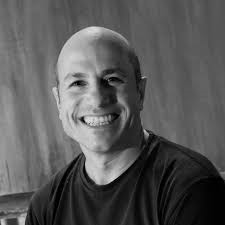
Coordinator: Mr Rico Euripido
Rico Euripidou works for GroundWork a local NGO based in Durban (South Africa) where he is the Environmental Health Campaign Manager. GroundWork is a non-profit environmental justice service and developmental organisation working primarily in Southern Africa in the areas of Climate & Energy Justice, Coal, Environmental Health, Global Green and Healthy Hospitals, and Waste. He has a Master’s degree in Environmental Epidemiology from the London School of Hygiene and Tropical Medicine and a Masters degree in Contaminated Land Management from Nottingham University in England. Rico’s interests lie in working on issues of energy policy, climate change and public health, all of which are of course interrelated and is also part of the National Mercury Stakeholders Committee.egion
Plenary Session 2 (Monday morning; 22 July 2024)
Theme: Effectiveness Evaluation of the Minamata Convention
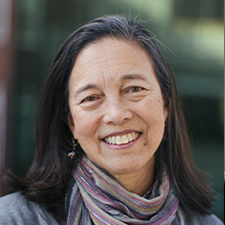
Coordinator: Prof Celia Chen
Celia Chen is a Research Professor of Biology at Dartmouth College and is an aquatic ecologist working in the area of contaminants in aquatic food webs. Over the last 28 years, her research has focused on the bioaccumulation and fate of metals, and mercury, in particular, in aquatic ecosystems including lakes and ponds, reservoirs, streams and rivers, and estuaries. She also communicates and facilitates the application of the research findings to policy makers, stakeholder groups, and the public at the state, national, and international levels. She serves on committees and partnerships of the United Nations Environment Programme related to the Minamata Convention, co-Chaired the 2017 ICMGP in Providence RI, and has led multiple synthesis efforts to bring mercury science to policy.
Plenary Session 3 (Tuesday morning; 23 July 2024)
Theme: Artisanal and small-scale gold mining
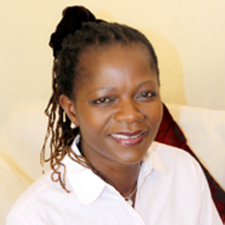
Coordinator: Prof Nellie Mutemeri
Prof. Nellie Mutemeri, is a Mineral Resources Governance Expert with a PhD in Geology. She is an Adjunct Professor in the School of Mining Engineering, University of Witwatersrand, South Africa, and the Director of its Mineral Resources Governance Research Group. She is the Founder and Mining Practice Director of MutConsult an advisory service in minerals, energy and climate. She has more than 30 years experience in the minerals sector in Africa, Latin America and Asia, focusing on sustainability, mineral policy and strategy, ASM formalisation, skills and technology development and transfer, gender equality, and responsible supply chains. She is a scientific board member at the UNESCO International Geosciences Council Programme and is on the editorial board of EPISODES: Journal of International Geoscience. She was previously a co-facilitator of the MQA technical group responsible for the SSM subsector skills, at the time she was the Divisional of Mintek’s Small-Scale Mining and Beneficiation Division.
Health Session with NIMD (Tuesday afternoon; 23 July 2024)
Theme: Minamata Disease Storytellers
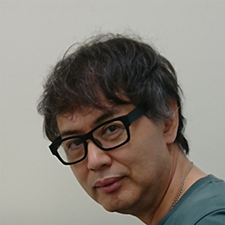
Coordinator: Dr Masatake Fujimura
The main target organ of methylmercury is the cerebral nerve system and its irreversible neuronal dysfunction remains one of the most serious problems.
I aim to elucidate the causal factor and the characteristics of the neuronal dysfunction caused by methylmercury through the comprehensive approach on the molecular level (gene, protein), the cellular level (cultivated cell), the individual level (experimental animal), and the human level (pathological tissue) and to apply the study results to diagnosis, prevention, and treatment.
Plenary Session 4 (Wednesday morning; 24 July 2024)
Theme: Next Generation Scientists

Coordinator: Mr Dominique Bally
Dominique Kpokro is a PhD candidate at the Universities of Surrey and Wollongong in the United Kingdom and Australia, respectively. As an environmental health expert, he coordinates several programs on artisanal and small-scale mining (ASM) for UN agencies, such as UNEP and UNIDO, and international NGO networks in over 25 Sub-Saharan African countries. His work has helped countries develop National Action Plans under the Minamata Convention, which aims to reduce mercury use, improve the living conditions of ASM communities, and regulate the sector to make it more beneficial for those who rely on it for survival. Additionally, his work advises African governments on chemical pollution reduction strategies in ASM and mercury-added products management, with the goal of effectively reducing environmental and occupational mercury-related impacts and facilitating the formalization of countries’ ASM sectors.
Plenary Session 5 (Thursday morning; 25 July 2024)
Theme: Mercury and Biodiversity – Assessing biodiversity impacts from mercury related activities in the environment
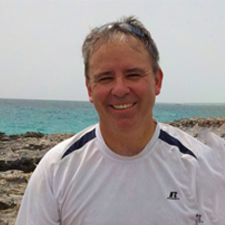
Coordinator: Dr David Evers
As a conservation biologist, I believe it is my responsibility to provide decision makers with scientific findings from an unbiased viewpoint. While I have testified or presented scientific results to Congressional committees, state legislative committees, and other regulatory branches of government, my current work primarily focuses on science-policy projects related to the United Nations and some multilateral environmental agreements, such as the Minamata Convention and the Convention on Biological Diversity.
Prof Lesley Sloss (Friday morning; 26 July 2024)
Theme: Mercury in the energy and petrochemical sectors
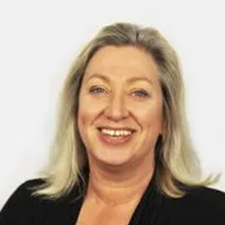
Coordinator: Prof Lesley Sloss (FRSC FIEnvSci CEnv)
After 34 years with the International Centre for Sustainable Carbon, a Technical Collaboration Programme under the auspices of the International Energy Agency, Lesley now works part-time with EPRI International while also engaging in UNEP-related projects in Southeast Asia. She has just completed a four-year, $2 million US State Department project to accelerate emission reduction in the energy sectors in India and Indonesia. Lesley currently co-leads the United Nations Environment Programme Coal Partnership, providing expert advice to the negotiations on the Minamata Convention on Mercury.Lesley is a Visiting Professor with the CEP at Strathclyde and an Adjunct Professor at Macquarie University in Sydney, Australia.